
A common question among pet owners is, what is a cat house? A cat house is a special place designed for cats to relax, play, and feel safe. While the term once referred mainly to outdoor shelters, today it also describes stylish and cozy indoor spaces for your home. Cat houses provide comfort, safety, and help your pet feel like they truly belong. Every cat deserves a comfy spot that matches their personality and preferences.
Cat owners now choose cat houses to give their pets privacy and a restful retreat, making life at home more enjoyable for everyone.
Key Takeaways
-
A cat house gives your cat a safe and warm place. Your cat can relax and feel safe there.
-
Cat houses lower stress by giving cats a quiet spot. They can get away from loud sounds and busy places.
-
Outdoor cat houses keep cats safe from bad weather. They also protect cats from animals that might hurt them.
-
Pick a cat house that fits your cat’s likes and personality. This will help your cat feel most comfortable.
-
Clean the cat house often to keep your cat healthy and happy.
-
Think about your cat’s age and needs when you pick a house. Kittens and older cats need different things.
-
Where you put the cat house is important. Pick a quiet and safe place so your cat feels calm.
-
User reviews can help you choose by sharing tips on comfort, strength, and how easy it is to clean.
What Is a Cat House? The Basics You Should Know
Definition and Purpose
A cat house is a special structure made for cats. It gives them a place to rest, hide, and feel safe. When people ask what is a cat house, the answer is simple. It is a small shelter or enclosure designed just for cats. Cat houses can be used indoors or outdoors. They help cats feel comfortable and secure in their environment.
The main purposes of a cat house include:
-
Providing a private space for your cat to relax
-
Offering protection from weather and other animals
-
Giving your cat a sense of territory and ownership
Cat houses are different from catteries and animal shelters. Catteries are large spaces where many cats live together, often for breeding or boarding. Animal shelters care for homeless or stray cats. A home cat house is much smaller and is meant for one or a few cats in a family setting.
Tip: A cat house can help reduce stress for your pet by giving them a quiet place away from noise and activity.
Evolution of the Term
The term "cat house" has changed over time. In the past, people used it to describe outdoor shelters for stray or feral cats. These shelters protected cats from rain, cold, and predators. Over the years, the meaning of what is a cat house has grown. Now, it also includes indoor spaces made for pet cats.
Today, cat houses come in many shapes and sizes. Some look like small houses with roofs and doors. Others are soft beds or covered hideaways. The design depends on where the cat house will be used and what your cat likes.
Modern Relevance
Cat houses are very important for modern cat owners. Many people live in busy homes or apartments. Cats need a place where they can feel safe and calm. A cat house gives them that special spot.
Modern cat houses are not just about function. They also add style to your home. Some are made to match your furniture or fit in small spaces. Others use eco-friendly materials or have fun designs. Cat owners can choose a cat house that fits their cat’s needs and their own taste.
In 2026, more people understand the value of giving their pets comfort and security. Cat houses help meet these needs. They make life better for both cats and their owners.
Why Does Your Cat Need One? (Benefits)
A cat house is more than just a place for your cat to sleep. It can improve your cat’s quality of life in many ways. Both pet cats and feral cats benefit from having a safe and comfortable shelter. Let’s explore the main reasons why your cat needs a cat house.
Comfort and Security
Cats need a space where they feel safe. A cat house gives them a private area that belongs only to them. This helps them relax and feel secure in their environment.
Privacy for Cats
Cats often look for quiet places to hide or rest. A cat house offers privacy, which is important for their well-being. When a cat has a private spot, it can escape from loud noises or busy parts of the home. This is especially helpful in homes with children or other pets.
Note: Cats are territorial animals. They feel happier when they have a space to call their own.
Stress Reduction
A cat house can lower stress for your cat. When cats feel safe, they are less likely to show signs of anxiety. A cozy shelter helps them calm down after a busy day. It also gives them a place to retreat during storms or when guests visit.
-
Cats with their own house often show:
-
Fewer behavior problems
-
Better sleep patterns
-
More playful moods
-
Cozzi Paws designs cat houses with comfort and security in mind. These features help your cat feel at ease every day.
Protection for Outdoor Cats
Outdoor cats face many dangers. A cat house can protect them from harsh weather and other threats. This is true for both pet cats that spend time outside and feral cats living on their own.
Weather Safety
A good cat house shields cats from rain, snow, and wind. Insulated models keep cats warm in winter and cool in summer. This protection is vital for outdoor cats, especially during extreme weather.
-
Key weather safety features:
-
Waterproof roofs
-
Raised floors to stay dry
-
Insulation for temperature control
-
Predator Defense
Outdoor cats may face threats from other animals. A sturdy cat house gives them a safe place to hide. Small entrances and strong materials keep larger animals out. This helps cats feel secure, even when they are outside.
Tip: Place the cat house in a quiet, hidden spot to give your cat extra safety from predators.
A cat house answers the question of what is a cat house by showing its true value. It is not just a shelter. It is a tool for comfort, safety, and happiness. Whether your cat lives indoors or outdoors, a cat house can make a big difference in its life.
Types of Cat Houses and Key Features to Look For
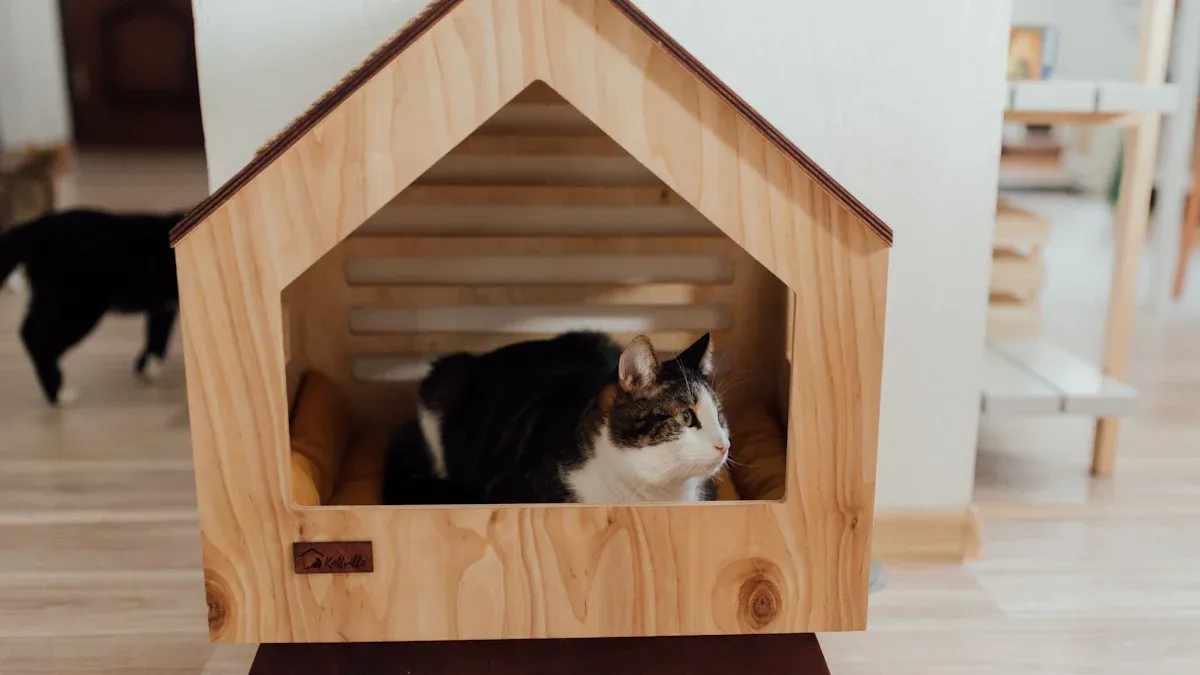
Cat houses have many styles. Each style has special benefits for cats and owners. Knowing the choices helps you pick the best shelter for your pet.
Indoor Cat Houses
Indoor cat houses are common in homes and apartments. They give comfort and look nice while keeping cats safe inside.
Plush and Soft Designs
Plush cat houses use soft stuff. These designs make a cozy spot for cats to nap or hide. Many have padded walls and soft floors. Cats like the warmth and softness. Owners pick plush houses for kittens or older cats who need more comfort.
-
Common features:
-
Removable cushions
-
Faux fur or fleece lining
-
Covered entrances for privacy
-
Tip: Put plush cat houses in quiet corners. This gives your cat a peaceful place to rest.
Multi-Level Options
Multi-level cat houses give more space for play and rest. These have platforms, ramps, and tunnels. Cats climb, jump, and explore different levels. Multi-level designs are good for active cats who like to move.
|
Feature |
Benefit |
|---|---|
|
Multiple tiers |
Encourages exercise |
|
Hideaway spots |
Adds privacy |
|
Scratching posts |
Supports healthy claws |
Multi-level houses often match home decor. They fit well in living rooms or bedrooms.
Outdoor Cat Houses
Outdoor cat houses keep cats safe from weather and danger. These shelters help pet cats who go outside and feral cats.
Insulated Models
Insulated cat houses keep cats warm when it is cold. Thick walls and floors hold heat inside. Some use foam or thermal panels. Insulation helps cats stay comfy in winter.
-
Key features:
-
Weatherproof materials
-
Raised bases to avoid dampness
-
Tight-fitting doors to block wind
-
Heated Cat Houses
Heated cat houses use electric pads or self-warming stuff. These shelters give extra warmth for outdoor cats. Heated models are safe and save energy. Owners use them when it gets very cold.
Note: Always check heated cat houses for safety before using them.
DIY and Custom Cat Houses
Some owners make their own cat houses. DIY cat houses let you be creative and make it special. You can use cardboard, wood, or fabric. Custom designs fit your cat’s size and personality.
-
Benefits of DIY:
-
Cost savings
-
Unique styles
-
Adjustable features
-
Custom cat houses help answer what is a cat house for many owners. They make a special place that fits both the cat and the home.
Essential Features of a Quality Cat House
Size and Space
Choosing the right size for a cat house is important. Cats need enough room to move, stretch, and turn around. A house that is too small can make your cat feel cramped. A house that is too large may not feel cozy. Most cats prefer a snug space that feels safe but still allows them to relax.
-
Single Cat: Look for a house with enough space for your cat to lie down and sit up comfortably.
-
Multiple Cats: Pick a larger house or one with separate compartments. This helps each cat have its own area.
-
Kittens vs. Adults: Kittens need less space, but they grow quickly. Choose a house that fits your cat’s current size and future needs.
Tip: Measure your cat before buying a house. Compare your cat’s length and height to the product dimensions.
A good cat house should also fit well in your home. Place it in a quiet spot where your cat likes to rest. Avoid busy areas with lots of foot traffic.
Materials and Durability
The materials used in a cat house affect its comfort and lifespan. Strong materials help the house last longer. Soft materials make it cozy for your cat.
|
Material Type |
Benefits |
Common Uses |
|---|---|---|
|
Wood |
Durable, sturdy |
Outdoor houses |
|
Plush fabric |
Soft, warm |
Indoor houses |
|
Plastic |
Easy to clean, light |
Portable houses |
|
Insulated panels |
Keeps heat in/out |
All-weather models |
Look for houses with reinforced seams and solid construction. Avoid thin fabrics that tear easily. Waterproof materials are best for outdoor use. Indoor houses can use plush or fleece for extra comfort.
Note: Durable materials save money over time. You will not need to replace the house often.
Easy Cleaning
A clean cat house keeps your pet healthy. Cats like tidy spaces. Owners need a house that is easy to clean.
-
Removable Cushions: These can be washed in a machine. They help keep the house fresh.
-
Smooth Surfaces: Plastic and wood wipe clean with a damp cloth.
-
Accessible Design: Large openings make it easy to reach inside. Some houses have zippered covers or panels that open.
Cleaning Tip: Check the house weekly for dirt, hair, or spills. Wash bedding and vacuum inside the house often.
A house that is easy to clean saves time. It also helps prevent odors and keeps your cat happy. Choose a design that matches your cleaning routine.
Safety and Accessibility
Safety and accessibility are very important in any cat house. Cat owners want their pets to feel safe and happy. A safe cat house keeps cats away from danger and stops accidents. Accessibility means cats of all ages and abilities can use the house easily.
Key Safety Features to Look For:
-
Stable Construction: A strong cat house does not fall over when a cat jumps or moves. Solid bases and tough walls keep the house steady.
-
Non-Toxic Materials: Cats may chew or lick things. Safe materials do not have bad chemicals or sharp edges.
-
Secure Entrances: Doors and openings should be big enough for cats to get in easily but small enough to keep other animals out. Rounded edges help stop injuries.
-
Ventilation: Good airflow keeps the house cool and fresh. Vents or mesh panels help air move around.
-
Weather Protection: Outdoor cat houses need waterproof roofs and raised floors. These keep cats dry and safe from rain or snow.
Tip: Always look for loose screws or broken pieces. Check the cat house often to keep it safe.
Accessibility Matters for Every Cat:
Cats need different things based on age, size, and health. Accessibility features help every cat use the house without problems.
|
Accessibility Feature |
Why It Matters |
Example |
|---|---|---|
|
Low Entryways |
Easy for kittens and seniors |
Door close to ground |
|
Wide Openings |
Allows larger cats to enter |
Spacious front entrance |
|
Ramp or Steps |
Helps cats with mobility |
Gentle slope or steps |
|
Multiple Exits |
Reduces stress, easy escape |
Two doors or openings |
Older cats or cats with injuries may have trouble with high doors or tight spaces. Ramps and gentle steps help them get inside. Wide openings let bigger cats enter without squeezing. Multiple exits give cats a way out if they get scared.
Safety and Accessibility Checklist:
-
Look for sharp edges or tiny parts.
-
Make sure the house sits flat on the floor.
-
Test doors and ramps to see if they move easily.
-
Check for soft padding inside for comfort.
-
Make sure there is good airflow with vents or mesh.
Note: Cats feel safer when they can see outside. Houses with windows or mesh panels help lower anxiety.
🐾 A good cat house has safety and accessibility. These features help cats feel calm and brave. Owners know their pets have a safe place to rest and play.
Buyer’s Guide: How to Choose the Right One
Assessing Your Cat’s Needs
Every cat is unique. Before you buy a cat house, look at your cat’s habits and preferences. Some cats love to climb and explore. Others prefer quiet, hidden spaces. Age also matters. Kittens often need smaller, softer spaces. Older cats may need easy access and extra comfort.
Ask yourself these questions:
-
Does your cat like to hide or stay in open areas?
-
Is your cat active or calm?
-
Does your cat have special needs, such as mobility issues?
-
How big is your cat? Will it grow much larger?
Tip: Watch your cat for a few days. Notice where it likes to sleep and play. This helps you choose a house that matches its favorite activities.
Cats with playful personalities may enjoy multi-level houses with ramps and tunnels. Shy cats often feel safer in enclosed, plush designs. If you have more than one cat, look for a house with separate sections or extra space.
Matching House to Environment
The place where you put the cat house is important. Indoor and outdoor environments need different features. For indoor use, pick a house that fits your home’s style and space. Soft, plush houses work well in bedrooms or living rooms. Multi-level designs can double as play areas.
For outdoor cats, choose a house that protects against weather and other animals. Look for waterproof materials, insulation, and raised floors. Heated cat houses are great for cold climates. Place outdoor houses in quiet, sheltered spots for extra safety.
|
Environment |
Best Features |
Example Placement |
|---|---|---|
|
Indoor |
Plush, stylish, multi-level |
Bedroom, living room |
|
Outdoor |
Insulated, waterproof, heated |
Porch, backyard |
Note: Always measure the space before buying. Make sure the house fits well and does not block walkways.
Budget and Value
Cat houses come in many price ranges. Set a budget before you shop. Think about what features matter most for your cat. Sometimes, spending a little more means better quality and longer use.
Look for these value points:
-
Durable materials that last
-
Easy-to-clean designs
-
Features that match your cat’s needs
Shopping at Cozzi Paws gives you extra value. You get free shipping on all orders, which saves money. Secure payment options protect your information. The easy return policy lets you shop with confidence. If the house does not fit your cat, you can return or exchange it within 30 days.
Remember: A good cat house is an investment in your cat’s comfort and happiness. Choose one that fits your budget and meets your cat’s needs.
User Reviews
User reviews help buyers make smart choices. Many cat owners share their experiences online. These reviews show what works and what does not. Reading them gives you real feedback from people who have used the product.
Most shopping sites display ratings and comments. Look for reviews that mention comfort, durability, and ease of cleaning. Owners often describe how their cats reacted to the new house. Some cats love plush designs. Others prefer multi-level options. Reviews can reveal if a house suits kittens, seniors, or active cats.
Tip: Read several reviews before deciding. One review may not tell the whole story.
Here are ways user reviews help you:
-
Spot Common Issues: If many people mention the same problem, pay attention. For example, if several reviews say the house is hard to clean, consider another model.
-
Learn About Features: Owners talk about what they like. They may praise soft cushions, sturdy walls, or easy assembly.
-
See Real Photos: Many reviewers post pictures. These show how the cat house looks in a real home. Photos help you judge size, color, and style.
-
Understand Cat Preferences: Reviews often mention the age and personality of the cat. This helps you match the house to your own pet.
|
Review Aspect |
What to Look For |
|---|---|
|
Comfort |
Cats sleeping or relaxing |
|
Durability |
Comments on wear and tear |
|
Cleaning |
Ease of washing or wiping |
|
Size |
Fit for large or small cats |
|
Assembly |
Simple setup instructions |
Some sites let you sort reviews by rating or date. Start with the most recent reviews. Products can change over time. New models may fix old problems.
Note: Verified buyers give the most reliable feedback. Look for reviews marked as "verified purchase."
Cozzi Paws encourages customers to share honest opinions. This helps future buyers choose the best cat house. Free shipping, secure payment, and easy returns make shopping worry-free. If a product does not meet your needs, you can return it within 30 days.
User reviews guide you to the right choice. They show what real cats and owners think. Take time to read them. Your cat deserves a house that fits its needs and personality.
Successful Tips on Setup and Maintenance
Placement Tips
Choosing the right spot for your cat house is important. Cats feel safe in quiet areas. Place the cat house away from loud noises and busy walkways. Corners of rooms work well. Avoid spots near doors that open often. Sunlight can make the house warm and cozy, but too much heat may bother your cat. Try to find a balance.
For outdoor cat houses, pick a location with shelter from wind and rain. Under a porch or beside a wall gives extra protection. Raise the house off the ground to keep it dry. Make sure the entrance faces away from strong winds.
Tip: Watch where your cat likes to nap. Place the house in a similar spot for better acceptance.
Initial Setup
Setting up a new cat house takes a few simple steps. Start by checking all parts for safety. Remove any tags, plastic, or loose threads. Place a soft blanket or cushion inside. Familiar smells help your cat feel at home. Use a towel or bedding your cat already uses.
Let your cat explore the house at its own pace. Do not force your cat inside. Place treats or toys near the entrance to encourage curiosity. Some cats enter right away. Others need more time.
If you have more than one cat, give each cat its own space. This prevents fights and stress. For outdoor houses, check that the house is stable and does not wobble.
Note: Patience is key. Cats may take a few days to use a new house.
Cleaning Routine
A clean cat house keeps your pet healthy and happy. Regular cleaning removes dirt, fur, and odors. Most indoor cat houses have removable cushions or covers. Wash these in the machine every week. Use mild soap and rinse well.
Wipe hard surfaces with a damp cloth. For outdoor houses, sweep out leaves and debris. Check for mold or damp spots. Dry the house fully before letting your cat back inside.
|
Cleaning Task |
How Often |
Supplies Needed |
|---|---|---|
|
Wash bedding |
Weekly |
Mild detergent |
|
Wipe surfaces |
Weekly |
Damp cloth |
|
Deep clean |
Monthly |
Vacuum, soap, water |
|
Check for damage |
Monthly |
Visual inspection |
Reminder: Always use pet-safe cleaners. Strong chemicals can harm your cat.
A regular cleaning routine keeps the cat house fresh. Your cat will enjoy a tidy, comfortable space every day.
Seasonal Adjustments
Cat houses need changes during different seasons. Cats feel more comfortable when their shelter matches the weather. Owners should check the cat house as the seasons change. This helps keep cats safe and happy all year.
Spring
Spring brings warmer days and more sunlight. Cats may spend more time outside. Owners should clean the cat house after winter. Remove old bedding and check for mold or damp spots. Open windows or vents to let fresh air inside. Add lighter blankets or mats. This keeps the house cool and fresh.
Summer
Hot weather can make cats uncomfortable. Owners should move the cat house to a shady spot. Use cooling mats or pads inside. Make sure the house has good airflow. Mesh panels or extra vents help air move. Check for signs of overheating. Cats may pant or look tired. Give fresh water every day.
Tip: Place ice packs under bedding for extra cooling. Wrap them in a towel to avoid direct contact.
Fall
Fall brings cooler air and more rain. Owners should check the roof and walls for leaks. Add thicker bedding to keep cats warm. Close extra vents to block cold wind. Clean out leaves and debris from around the house. Raise the house off wet ground. This stops water from getting inside.
Winter
Cold weather needs special care. Owners should use insulated cat houses or add foam panels. Heated pads or self-warming beds help cats stay warm. Check the entrance for drafts. Use weatherproof covers to block snow and rain. Make sure the house stays dry inside. Replace wet bedding right away.
|
Season |
Key Adjustments |
Supplies Needed |
|---|---|---|
|
Spring |
Clean, air out, light bedding |
Mild cleaner, mats |
|
Summer |
Shade, cooling, airflow |
Cooling pads, water |
|
Fall |
Thicker bedding, block wind |
Blankets, sealant |
|
Winter |
Insulation, heat, dry space |
Foam panels, heaters |
Checklist for Seasonal Adjustments:
-
Inspect the cat house for damage.
-
Change bedding to match the weather.
-
Adjust vents and windows for airflow or warmth.
-
Move the house to a safe spot.
-
Check for leaks or drafts.
-
Provide fresh water and food.
Cats need a safe place in every season. Owners who adjust the cat house help their pets stay healthy and comfortable. Regular checks and small changes make a big difference. 🐾
Troubleshooting Common Issues
Cat houses can improve your cat’s comfort and safety. Sometimes, owners face challenges after setting up a new cat house. Here are solutions for the most common problems.
Poor Placement
Cats need a quiet and secure spot for their house. Placing the cat house in a busy area can make your cat avoid it. Loud noises, heavy foot traffic, or direct sunlight may cause discomfort.
Signs of poor placement:
-
Cat ignores the house
-
Cat chooses other hiding spots
-
Cat seems anxious near the house
How to fix poor placement:
-
Move the cat house to a calm corner.
-
Avoid placing it near doors or windows with drafts.
-
Choose a spot with soft lighting.
-
Watch where your cat likes to nap and place the house there.
Tip: Cats prefer locations with a good view of the room but away from loud appliances.
Cat Reluctance
Some cats do not use their new house right away. This reluctance can happen for many reasons. The house may smell unfamiliar, or your cat may need time to adjust.
Ways to encourage your cat:
-
Place familiar bedding or toys inside the house.
-
Sprinkle a little catnip in the house.
-
Use treats to lure your cat inside.
-
Allow your cat to explore at its own pace.
|
Method |
Effectiveness |
Notes |
|---|---|---|
|
Familiar bedding |
High |
Comforts your cat |
|
Catnip |
Medium |
Works for some cats |
|
Treats |
High |
Positive reinforcement |
|
Toys |
Medium |
Attracts playful cats |
Note: Patience is important. Some cats need several days to feel comfortable.
Wear and Tear
Cat houses experience wear over time. Scratching, biting, and regular use can damage materials. Owners should check the house often for signs of damage.
Common signs of wear:
-
Torn fabric or cushions
-
Loose screws or panels
-
Scratched surfaces
-
Broken zippers or doors
Maintenance tips:
-
Inspect the house every week.
-
Tighten screws and fix loose parts.
-
Replace worn bedding or cushions.
-
Clean surfaces to prevent buildup of dirt and fur.
🛠️ Regular maintenance keeps the cat house safe and comfortable. A well-kept house lasts longer and protects your cat.
Reminder: Quick repairs prevent bigger problems. Address small issues before they become serious.
Troubleshooting helps you create a better environment for your cat. Simple changes and regular checks make a big difference in your cat’s happiness and safety.
A cat house gives your pet comfort, safety, and a place to call home. It helps reduce stress and supports healthy habits. Choosing the right cat house means looking at size, materials, and your cat’s needs. Regular cleaning and good placement keep your cat happy.
Every cat deserves a safe and cozy space. Make your choice with care and watch your cat thrive in 2026.
FAQ
What is the best material for a cat house?
Wood and plush fabric are popular choices. Wood lasts longer outdoors. Plush fabric feels soft and warm indoors. Choose materials based on your cat’s comfort and the house’s location.
How often should I clean my cat house?
Clean the cat house weekly. Wash bedding and wipe surfaces. Check for dirt, fur, and odors. Regular cleaning keeps your cat healthy and happy.
Can outdoor cat houses be used in winter?
Yes, insulated and heated cat houses protect cats from cold weather. Add thick bedding for extra warmth. Place the house in a sheltered spot to block wind and snow.
Do cats prefer open or enclosed houses?
Some cats like open spaces. Others feel safer in enclosed houses. Watch your cat’s behavior to decide. Enclosed houses offer privacy and reduce stress.
How do I encourage my cat to use a new house?
Place familiar bedding or toys inside. Use treats near the entrance. Let your cat explore at its own pace. Patience helps your cat adjust.
Are cat houses suitable for kittens and senior cats?
Yes, cat houses fit all ages. Kittens need low entryways. Senior cats benefit from ramps and soft bedding. Choose features that match your cat’s needs.
What size cat house should I buy?
Measure your cat’s length and height. Pick a house with enough space to stretch and turn. For multiple cats, choose a larger house or one with separate sections.
Can I build a DIY cat house at home?
Yes, many owners build DIY cat houses. Use cardboard, wood, or fabric. Make sure the house is safe and comfortable. Custom designs fit your cat’s personality.


